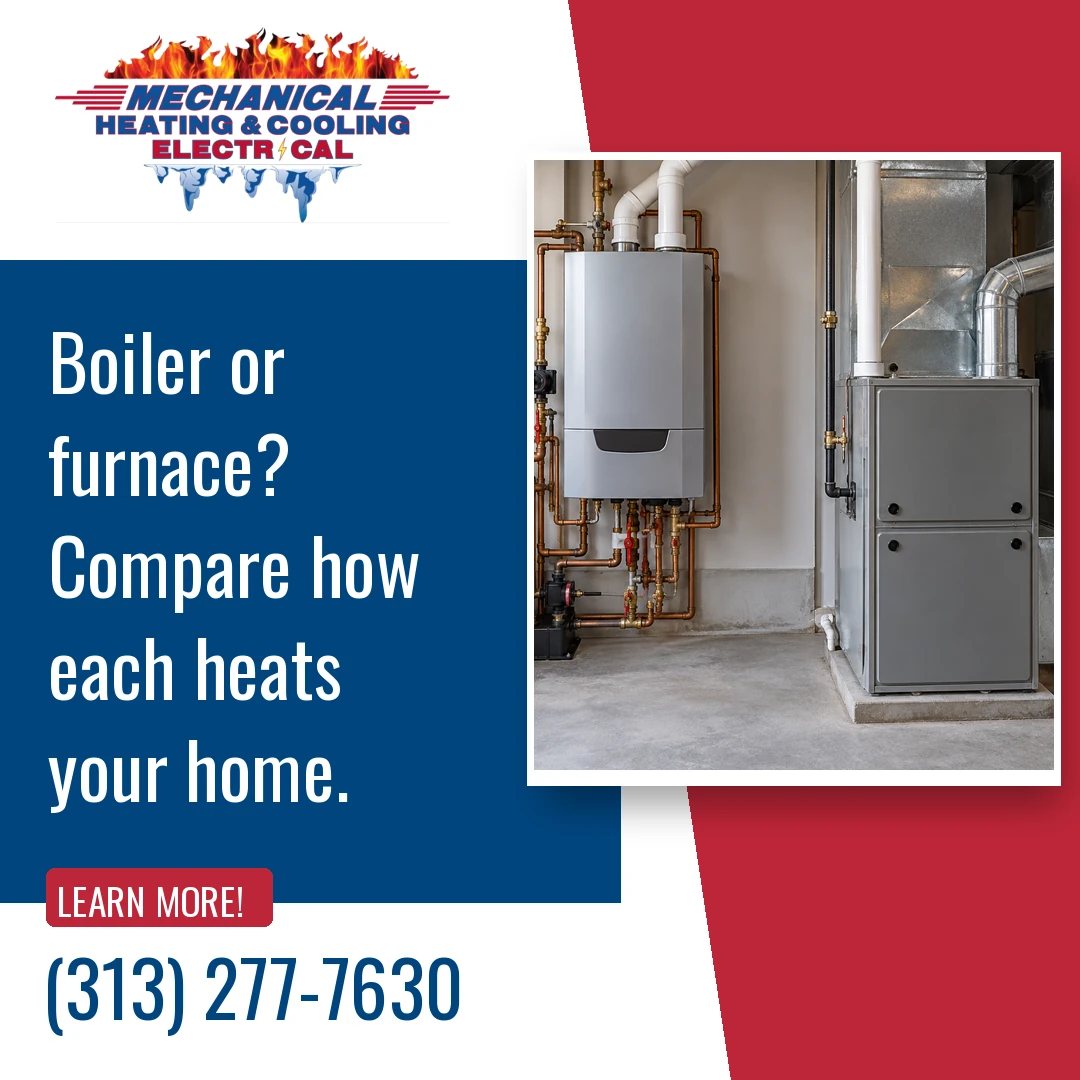
Still not sure which one fits your Dearborn Heights home? Let's break it down in plain, simple terms.
01Boiler vs. Furnace: What's the Difference?
The main difference between boiler and furnace systems comes down to one thing: what they use to move heat.
A furnace heats air. It pulls in cold air, warms it over a heat exchanger, and pushes it through ducts and vents into every room.
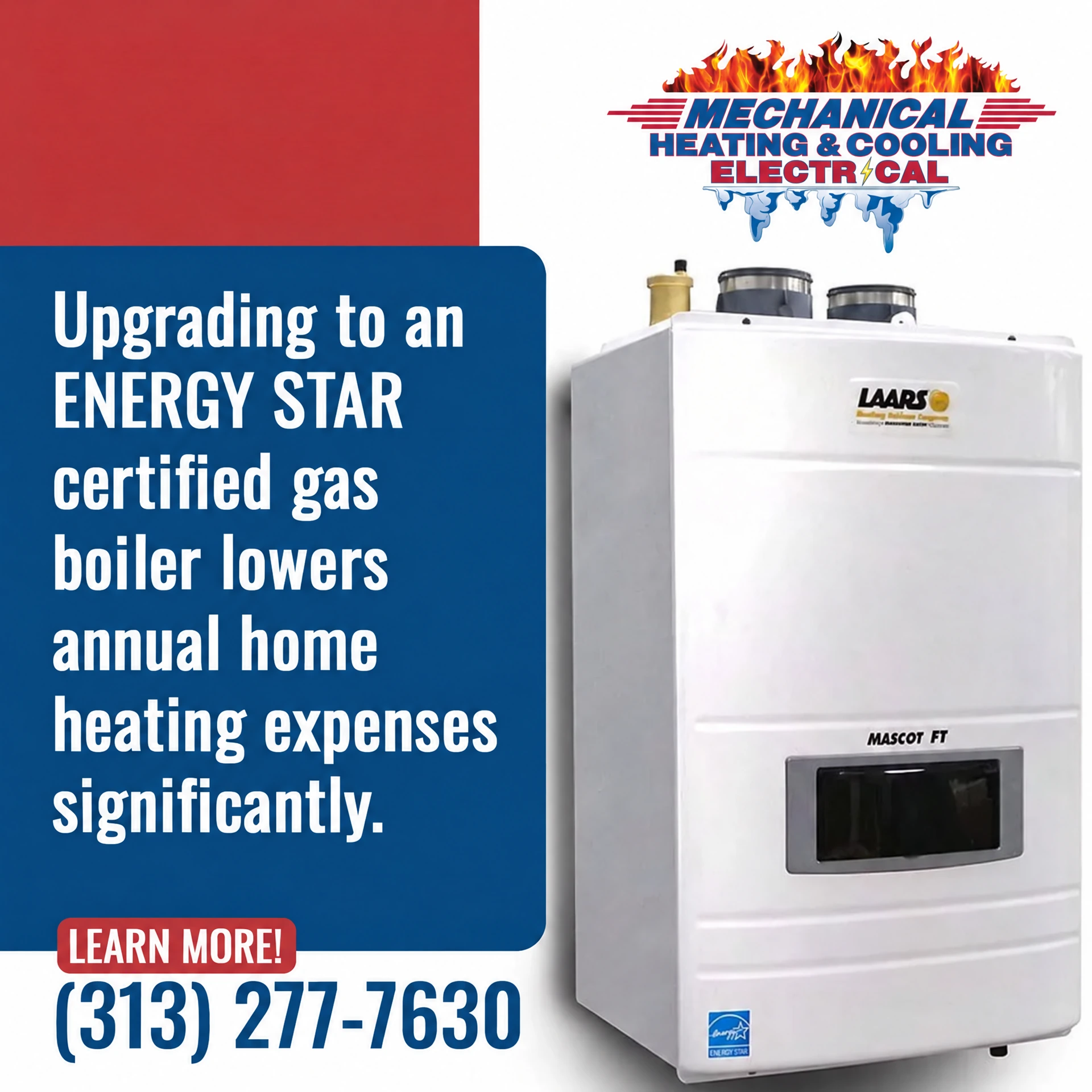
A boiler heats water. That hot water (or steam) travels through pipes to radiators, baseboard heaters, or in-floor tubing, warming rooms from the ground up.
Both a gas furnace and boiler can run on natural gas, which is why homeowners often search for "gas boiler furnace" options when comparing systems. The fuel source can be the same. It's the delivery method that sets them apart.
If your Dearborn Heights home already has ductwork, a furnace is usually the simpler fit. If you have radiators or hydronic flooring, a boiler makes more sense.
02The Difference Between Boiler and Furnace Heat
This is where a lot of homeowners get confused. Both systems make your house warm, but they don't feel the same.
Furnace heat is quick. It blows warm air out fast, so rooms heat up in a hurry. But that air can feel dry, and heat can fade quickly once the furnace shuts off.
Boiler heat is slow and steady. Since it warms water instead of air, the heat holds longer, even after the system turns off. Many people describe boiler heat as more comfortable, especially in cold Michigan winters.
Here's a simple way to picture it:
Furnace: Fast heat, dries out over time, needs ductwork
Boiler: Slow, even heat, holds warmth longer, needs pipes and radiators
If you've ever wondered about the furnace boiler difference in daily comfort, this is really the heart of it. It's not about which one is "better." It's about which kind of warmth you prefer.
03Maintenance Requirements
Every heating system needs care to run safely and efficiently. But boilers and furnaces don't need the exact same kind of attention.
Furnace maintenance usually includes:
- Changing or cleaning the air filter every 1–3 months
- Checking the blower motor and belts
- Inspecting the heat exchanger for cracks
- Testing the thermostat and ignition system
Boiler maintenance usually includes:
- Checking water pressure and levels
- Bleeding radiators to remove trapped air
- Inspecting for leaks in pipes or valves
- Testing the pressure relief valve
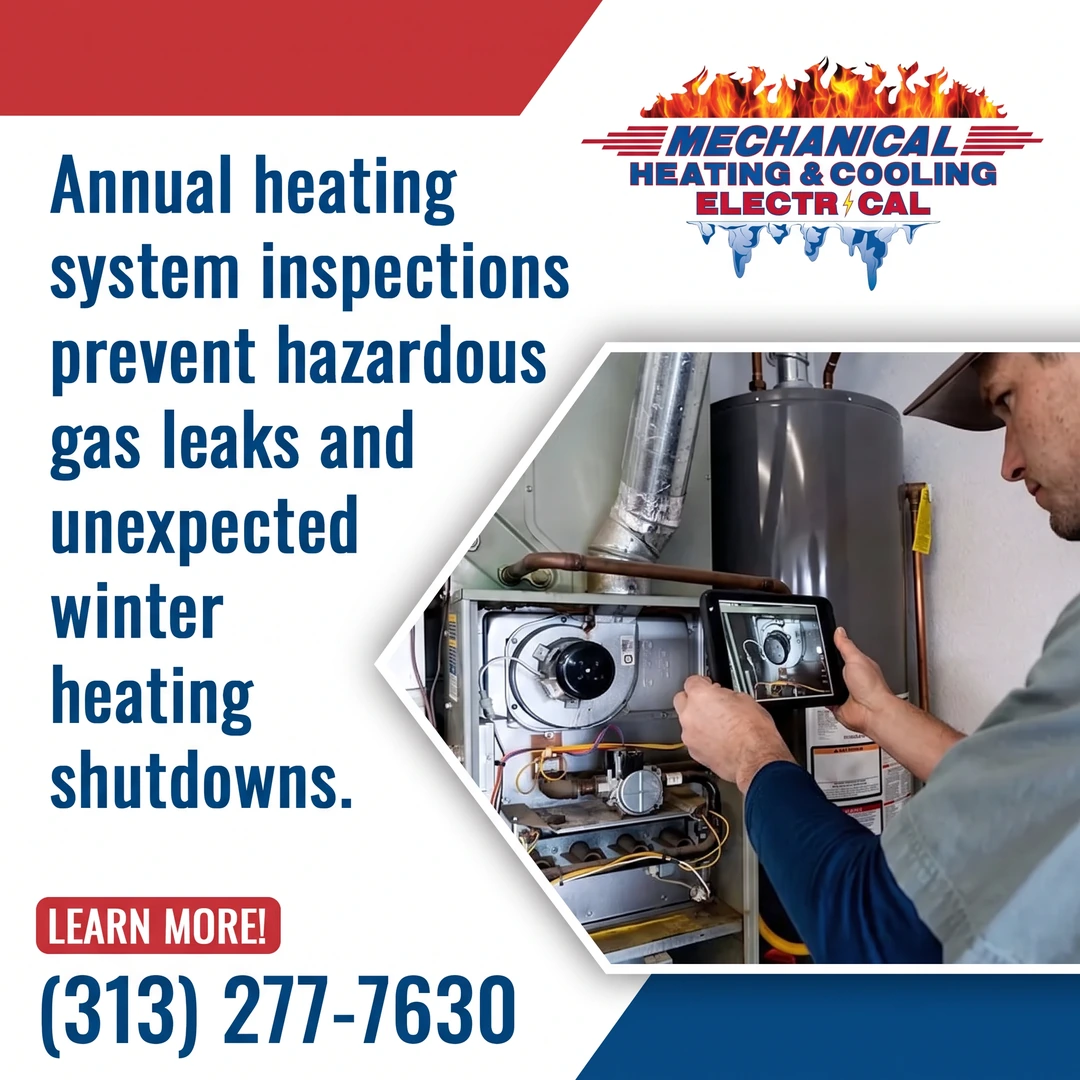
Boilers tend to have fewer moving parts, so they can go a bit longer between big repairs. But when something does go wrong, like a leak or a cracked pipe, boiler service in Dearborn Heights should be handled by a trained technician right away. Water damage can spread fast.
Furnaces have more mechanical parts that can wear out. That's why regular furnace service matters just as much. A yearly checkup catches small issues before they turn into a system replacement.
Either way, a heat boiler or furnace, skipping maintenance almost always leads to higher energy bills and shorter equipment life.
04Boiler vs. Furnace: Pros and Cons
Let's look at the strengths and weaknesses of each side by side.
Furnace Pros:
- Lower upfront installation cost
- Heats rooms quickly
- Works well with central air conditioning (shares ductwork)
- Easier and often cheaper to repair
Furnace Cons:
- Can dry out indoor air
- Ducts can leak air, wasting energy
- Noisier operation from blower fans
Boiler Pros:
- Even, comfortable heat throughout the day
- No dry air or duct dust blown around
- Often longer lifespan than furnaces
- Quieter operation
Boiler Cons:
- Higher upfront installation cost
- No built-in air conditioning option
- Repairs can be more complex
- Takes longer to heat a cold room
When homeowners compare furnace vs boiler options, the decision often comes down to budget versus comfort. If you want lower costs now, a furnace wins. If you want steady, quiet warmth for years to come, a boiler is worth the investment.
05Energy Efficiency of Boilers vs. Furnaces
Both systems have made big efficiency gains over the years, and this is often the deciding factor for homeowners in Dearborn Heights.
Furnace efficiency is measured by AFUE (Annual Fuel Utilization Efficiency). A modern high-efficiency gas furnace can reach 90–98% AFUE, meaning almost all the fuel turns into usable heat.
Boilers are measured the same way, and high-efficiency models also reach into the 90s. However, boilers often lose less heat overall because they don't rely on ducts, where warm air can escape through gaps and poorly sealed joints.
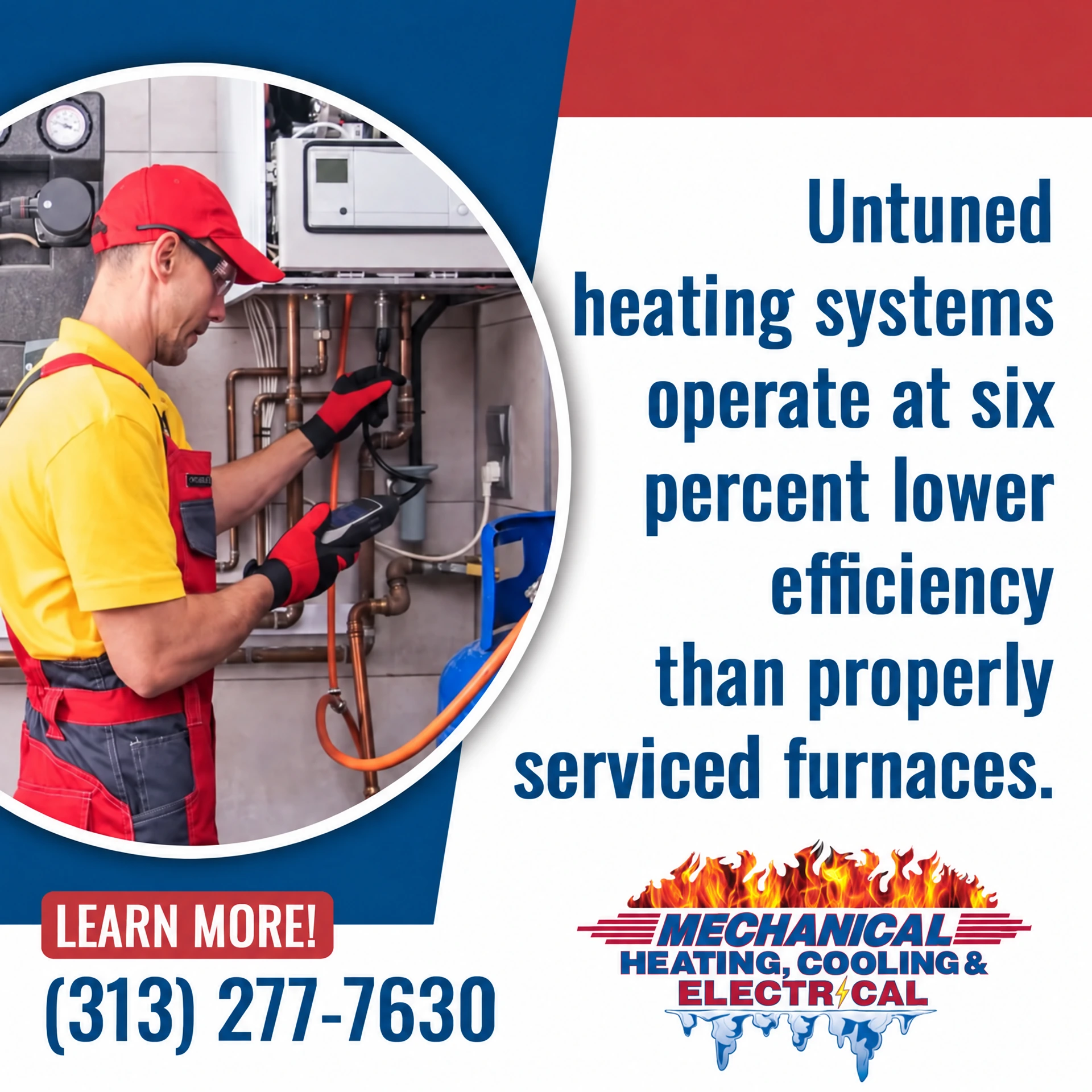
That said, a well-installed and well-maintained furnace can still run very efficiently. The real efficiency killer for either system is neglect. A dirty filter, a leaky duct, or a boiler with old insulation on its pipes can quietly drain money every month.
If lowering energy bills is your top goal, ask your technician for an efficiency rating comparison based on your actual home, not just national averages.
06So, Which One Should You Choose?
There's no single right answer for every home. Here's a simple way to think about it:
Choose a furnace if: You already have ductwork, want lower upfront costs, and want central AC compatibility.
Choose a boiler if: You want even, quiet heat, don't mind a higher install cost, and plan to stay in your home long term.
Both systems can serve Dearborn Heights homes and businesses well when they're installed correctly and maintained on schedule.
07Talk to a Local Heating Expert
Every home is different, and the right system depends on your space, your budget, and your comfort goals. The team at Mechanical Heating, Cooling & Electrical helps homeowners and business owners across Dearborn Heights choose, install, and maintain the right heating system for their needs.
Whether you need boiler service in Dearborn Heights, routine furnace service, or help deciding between the two, our technicians are ready to walk you through your options in plain, straightforward terms.
Call us today at 313-277-7630 to schedule a consultation or book a service visit.