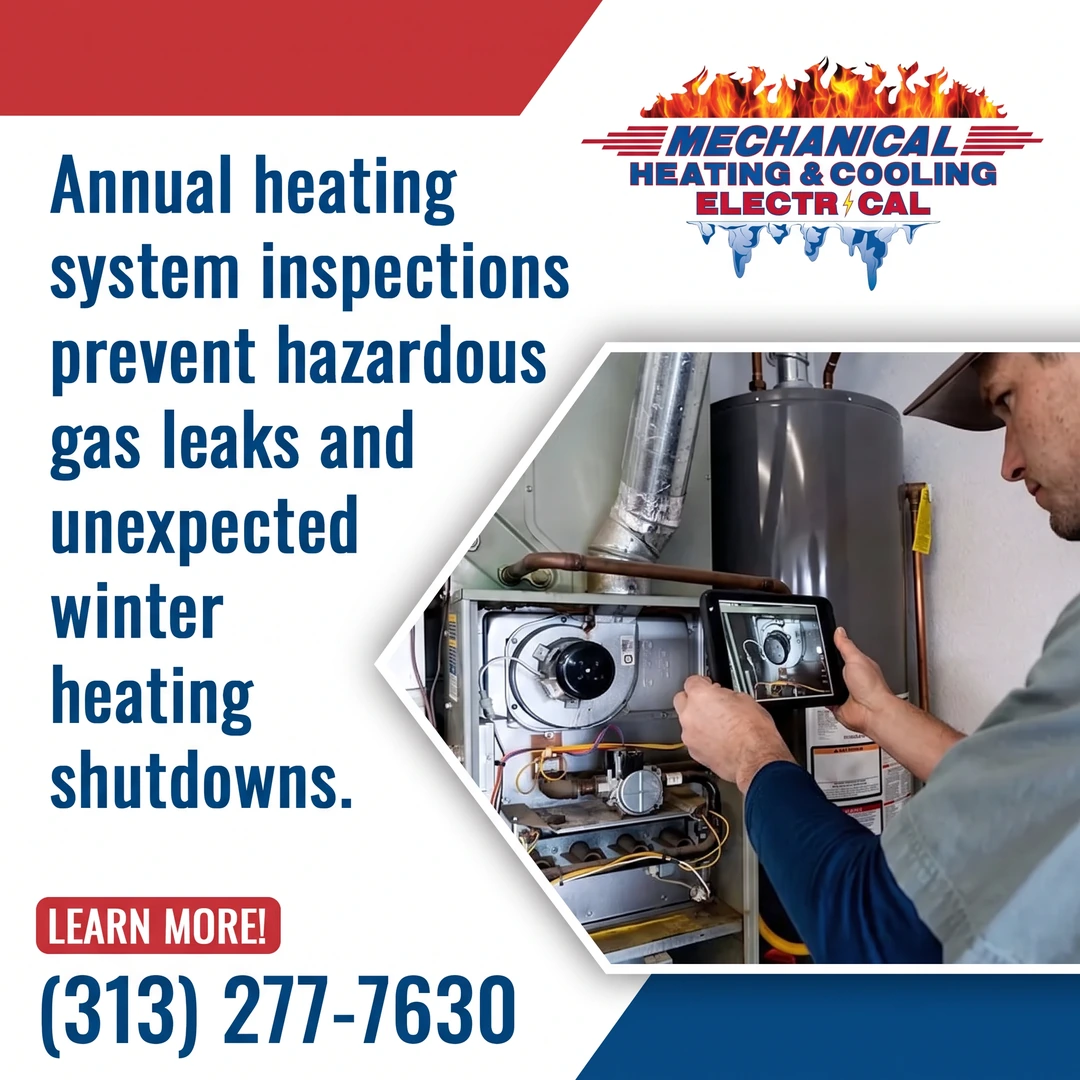
We get asked this a lot: “What actually happens during the visit?” Mechanical Heating, Cooling & Electrical technicians follow the same sequence on every fall call, because skipping steps is how small issues turn into January breakdowns. Here’s what that visit actually looks like.
01What Happens First When a Technician Arrives?
A technician starts with a visual and operational check before touching any components. This step catches obvious problems, like a failing filter or a thermostat that isn’t communicating, before moving into the more detailed inspection.
The opening walkthrough typically covers:
- Reviewing the furnace’s age, model, and service history
- Checking the thermostat’s response and settings
- Visually inspecting the cabinet, vents, and surrounding clearance
- Confirming the filter’s condition and replacing it if needed
- Listening for unusual noise during a test cycle
This step alone often reveals whether routine furnace maintenance has been happening on schedule or has lapsed for a year or more.
02What Does the Technician Check Inside the Furnace Itself?
Inside the cabinet, the technician checks components that affect safety and efficiency, including the heat exchanger, burners, ignition system, and gas pressure. A heating system tune-up may include:
- Inspecting the heat exchanger for cracks or corrosion
- Cleaning and testing burners and ignition components
- Checking gas pressure against manufacturer specifications
- Testing flame sensors and limit switches
- Tightening electrical connections and lubricating motors
The National Fire Protection Association recommends that heating systems be cleaned and inspected annually by a qualified professional, based on its ongoing data on home heating equipment fires and safety incidents.
How Does a Technician Judge What’s Normal vs. a Warning Sign?
A technician compares each reading against a known baseline for that furnace’s make and model, since “normal” varies by system. What looks fine on one furnace can be an early failure sign on another.
Inspection Point Normal Reading Warning Sign Heat exchanger No visible cracks or rust Hairline cracks, discoloration Gas pressure Matches manufacturer spec Reads high or low against spec Flame color Steady blue Yellow, flickering, or lifting Airflow Consistent across vents Weak or uneven airflow at registers Electrical connections Tight, no corrosion Loose, scorched, or corroded03Why Choose Us for Fall HVAC Services?
Fall is a practical time to prepare your home for heavier heating and hot water use in the coming winter season.
At Mechanical Heating, Cooling & Electrical, we help Dearborn Heights homeowners prepare with HVAC and related home-comfort services, including:
- Furnace maintenance and heating system tune-ups to prepare heating equipment for winter.
- Dryer vent and duct cleaning: to help keep dryer exhaust pathways clear before winter.
- Water heater replacement in Dearborn Heights: homeowners may need it when an aging unit shows signs of wear before heavier hot water use begins.
- Air conditioning services: to address cooling system needs before the next warm-weather season.
Taking care of these services before winter gives homeowners an opportunity to address developing issues and prepare their home for the demands of the coming season.
04Frequently Asked Questions
Do I need to be home during the technician’s visit?
Yes, someone typically needs to be present to provide access to the furnace, thermostat, and any interior shut-off valves.
What happens if the technician finds a problem?
The technician explains the issue, shows you the reading or component involved, and provides repair options before doing any additional work.
Are furnace technicians required to be certified?
Reputable HVAC companies employ technicians who hold recognized certifications and follow manufacturer-specific training for the systems they service.
05Prepare Your Furnace for the Cold
A thorough heating system tune-up catches the problems a homeowner can’t see or test alone. Mechanical Heating, Cooling & Electrical has been walking Metro Detroit homeowners through this exact process since 1983.
Book your furnace inspection before the season’s first cold morning arrives. Call (313) 277-7630 or email info@mechanicalheating.com to schedule your appointment.